
Digital Marketing Trends for E-Commerce Businesses to Succeed in 2026
January 13, 2026
Semantic SEO vs Traditional SEO: What’s the Difference?
January 19, 2026
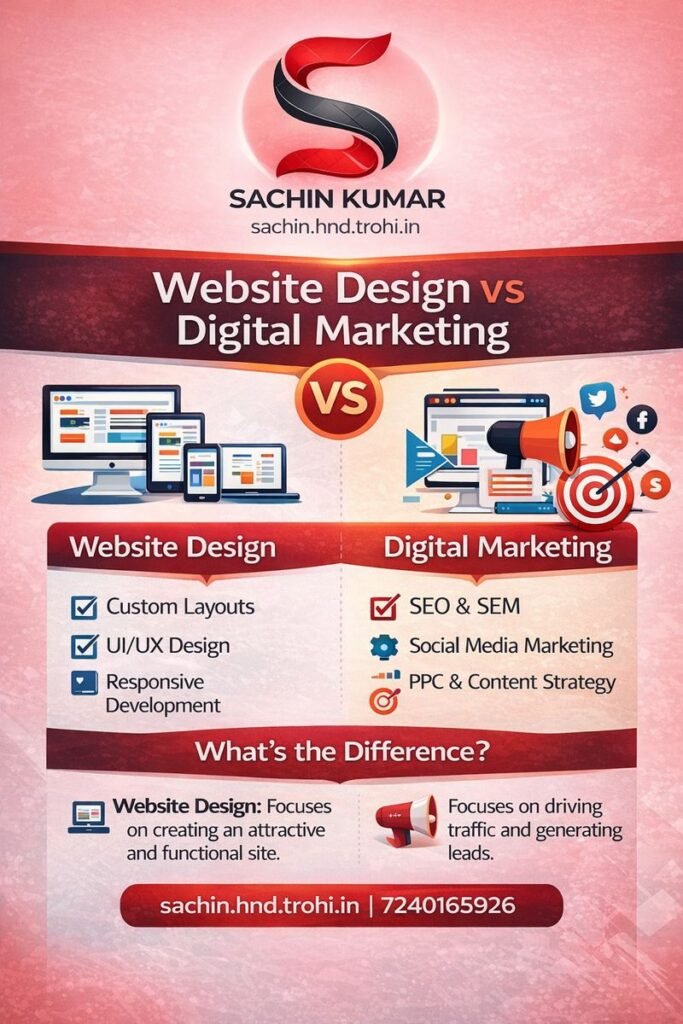
Website Design focuses on creating a visually appealing, fast, and user-friendly website. Digital Marketing focuses on driving traffic, generating leads, and growing the business. A website without marketing gets no visitors,and marketing without a website has no destination. Both together create online success.”

Website Design is like a house that makes everything look beautiful and comfortable. Digital Marketing is the road that brings people to that house. Without design, the house is useless; without marketing, no one visits. Both are incomplete without each other.
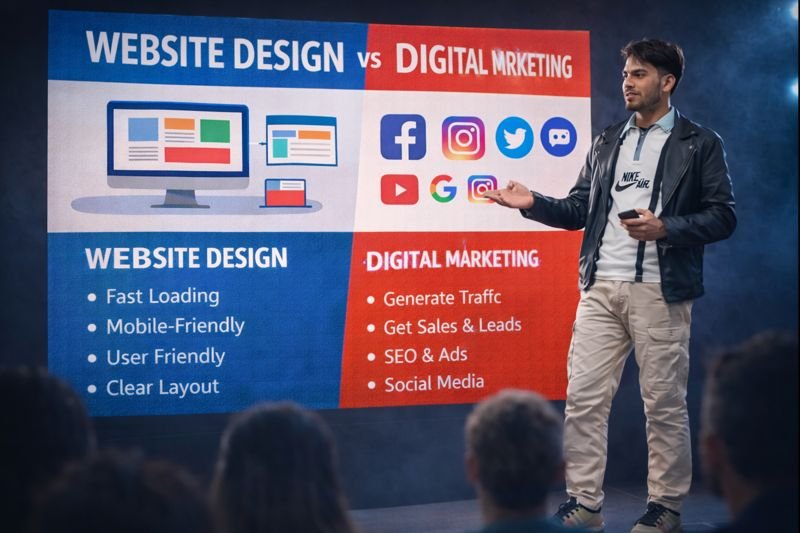
In today’s digital era, businesses cannot survive without a strong online presence. Two of the most important pillars of online success are Website Design and Digital Marketing. Many people confuse these two or think they are the same, but in reality, they serve very different purposes. Website design creates the foundation of an online business, while digital marketing acts as the driving force that brings customers to that foundation. Understanding the difference between Website Design and Digital Marketing is essential for business owners, students, and professionals who want to grow in the digital world.
This article explains Website Design vs Digital Marketing in 10 detailed points, helping you clearly understand their roles, differences, and how they work together.
This article explains Website Design vs Digital Marketing in 10 detailed points, helping you clearly understand their roles, differences, and how they work together.
1. Definition and Meaning
Website Design refers to the process of planning, creating, and arranging the visual layout and structure of a website. It includes everything a user sees on the screen—layout, colors, fonts, images, buttons, and navigation. Website design ensures that a website looks professional, works smoothly, and provides a good user experience.
Digital Marketing, on the other hand, is the practice of promoting products, services, or brands using online channels. It includes SEO, social media marketing, paid ads, email marketing, content marketing, and more. Digital marketing focuses on reaching the right audience and convincing them to take action.
In simple words, website design builds the shop, while digital marketing brings customers to the shop.
2. Primary Purpose
The primary purpose of Website Design is to create a platform that is easy to use, visually appealing, and aligned with the brand’s identity. A well-designed website builds trust, improves credibility, and helps visitors understand the business quickly. It focuses on usability, accessibility, and aesthetics.
The primary purpose of Digital Marketing is to generate traffic, leads, and sales. It ensures that the website reaches potential customers through search engines, social media platforms, and online advertisements. Digital marketing is performance-driven and focuses on measurable results such as clicks, conversions, and return on investment (ROI).
While website design focuses on presentation and experience, digital marketing focuses on promotion and performance.
3. Role in the Customer Journey
Website design plays a critical role when a user visits a website. It creates the first impression of the brand. A clean design, fast loading speed, mobile responsiveness, and easy navigation encourage users to stay longer and explore the website.
Digital marketing plays a role before and after the website visit. Before the visit, it attracts users through search results, social media posts, and paid advertisements. After the visit, it helps retain users through remarketing ads, email campaigns, and follow-ups.
In the customer journey, digital marketing brings users to the website, and website design convinces them to stay, engage, and convert.
4. Skills and Expertise Required
Website design requires a combination of creative and technical skills. Designers need to understand UI/UX principles, color theory, typography, responsive design, and basic coding languages such as HTML and CSS. They must also understand user behavior to design websites that are intuitive and easy to navigate.
Digital marketing requires analytical, strategic, and communication skills. Digital marketers must have knowledge of SEO, keyword research, social media strategy, paid advertising, content creation, data analysis, and conversion optimization. Understanding audience psychology and writing persuasive content are also essential skills.
In short, website design is more creative and structural, while digital marketing is more strategic and data-driven.
5. Tools and Technologies Used
Website designers use tools such as Figma, Adobe XD, Photoshop, WordPress, Webflow, and various front-end frameworks. These tools help designers create layouts, prototypes, and responsive designs that work across devices.
Digital marketers use tools like Google Analytics, Google Search Console, Google Ads, Meta Ads Manager, email marketing platforms, and SEO tools. These tools help marketers track performance, analyze user behavior, run campaigns, and optimize strategies.
Although the tools are different, the ultimate goal of both is business growth and success.
6. Focus Area: User Experience vs Visibility
Website design primarily focuses on user experience (UX). A good UX ensures that users can easily find information, navigate pages smoothly, and complete actions without confusion. A positive user experience reduces bounce rates and increases conversions.
Digital marketing focuses on visibility and reach. It ensures that the website appears in front of the right audience on search engines, social media platforms, and advertising networks. Without digital marketing, even the best-designed website may remain unseen.
Thus, website design improves how users interact, while digital marketing improves how users discover the website.
7. Timeframe and Results
Website design often shows immediate results once the website is live. Visitors can instantly experience the design, layout, and usability. However, design alone does not guarantee traffic or sales.
Digital marketing results depend on the strategy used. Paid advertising can generate quick traffic, while SEO and content marketing take time but provide long-term benefits. Digital marketing requires continuous monitoring, testing, and optimization.
Website design is usually project-based, while digital marketing is ongoing and long-term.
8. Cost and Investment
Website design is typically a one-time or occasional investment. Businesses may redesign their website every few years to stay updated with trends and technology. The cost depends on the complexity, features, and customization required.
Digital marketing requires continuous investment. Advertising budgets, content creation, SEO efforts, and campaign optimization involve regular spending. However, digital marketing offers measurable ROI and scalability, making it a valuable investment.
A successful business invests in both: design for credibility and marketing for growth.
9. Conversion and Sales Responsibility
Website design supports conversions by providing clear layouts, strong call-to-action buttons, fast loading speed, and mobile-friendly design. A poorly designed website can reduce trust and cause visitors to leave without taking action.
Digital marketing drives targeted traffic that is more likely to convert. By targeting specific audiences, interests, and keywords, digital marketing increases the chances of generating quality leads and sales.
Conversions happen when website design and digital marketing work together effectively.
10. Relationship and Dependency
Website design and digital marketing are not competitors—they are partners. A business cannot succeed online with only one of them. A beautifully designed website without traffic is ineffective, and aggressive marketing without a good website wastes money.
Website design provides the foundation where users land, while digital marketing ensures a consistent flow of visitors. Together, they create a complete digital ecosystem that supports branding, lead generation, and sales.
In reality, website design is the foundation, and digital marketing is the growth engine.
Conclusion
The discussion of Website Design vs Digital Marketing is not about choosing one over the other. Both are equally important and serve complementary roles. Website design builds trust, improves user experience, and strengthens brand identity. Digital marketing increases visibility, attracts the right audience, and drives measurable business results.
For long-term online success, businesses must invest in strong website design and smart digital marketing strategies together. When combined effectively, they create a powerful system that helps businesses grow, compete, and succeed in the digital world.